Luvinci
October 18, 2026
Phonemic Awareness Activities: 15 Games + Free Worksheets
6 free PDFs in this post
Rhyme puzzles and picture cards
Sound play pages
Next step, sounds to letters
Phonemic awareness activities are short listening games. They help your child hear the single sounds in spoken words, like the three sounds in sun: /s/ /u/ /n/.
Ask, “What’s the first sound in sun?” When your child says /s/, that’s a phonemic awareness activity.
You play them by ear, with no letters, in the car or at bath time. The 15 games below go easiest first, and each one has the words to say.
Our free phonemic awareness worksheets use pictures, not words, so your child doesn’t need to read. You’ll get a rhyme sort, a same-first-sound match, clap and color, and count the sounds. Letters come in on one last page, and there’s an answer key. Rhyme puzzles and picture cards sit in the list at the top of this post. No signup, no email.
Most kids start these in pre-K and kindergarten, then keep going in 1st grade.
Jump to: the worksheets · phonemic vs phonological · the 15 games · at home · by age · FAQ
Free phonemic awareness worksheets (PDF)
Every activity page uses pictures only. Your child says each picture’s name out loud and listens.
A 4-year-old can do pages 1 to 3 with you. Counting sounds on page 4 is usually a kindergarten or 1st grade job.
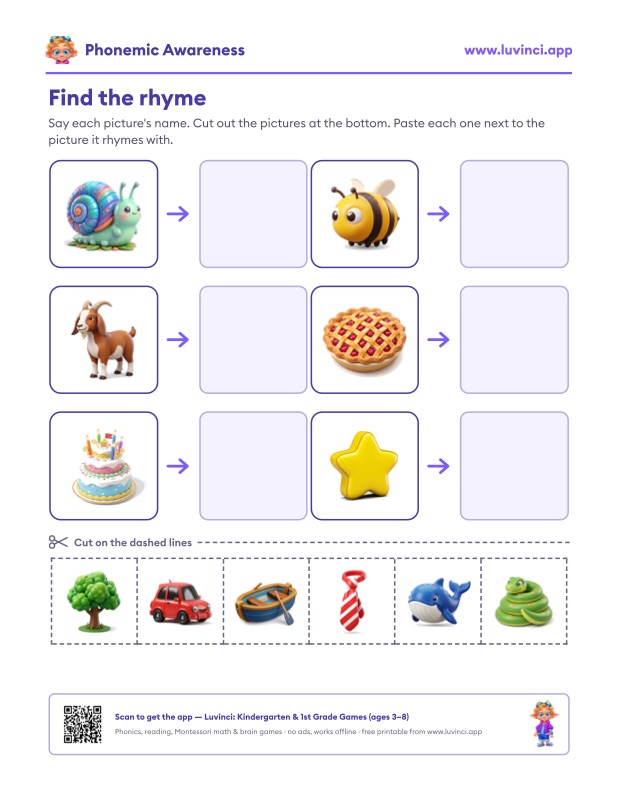
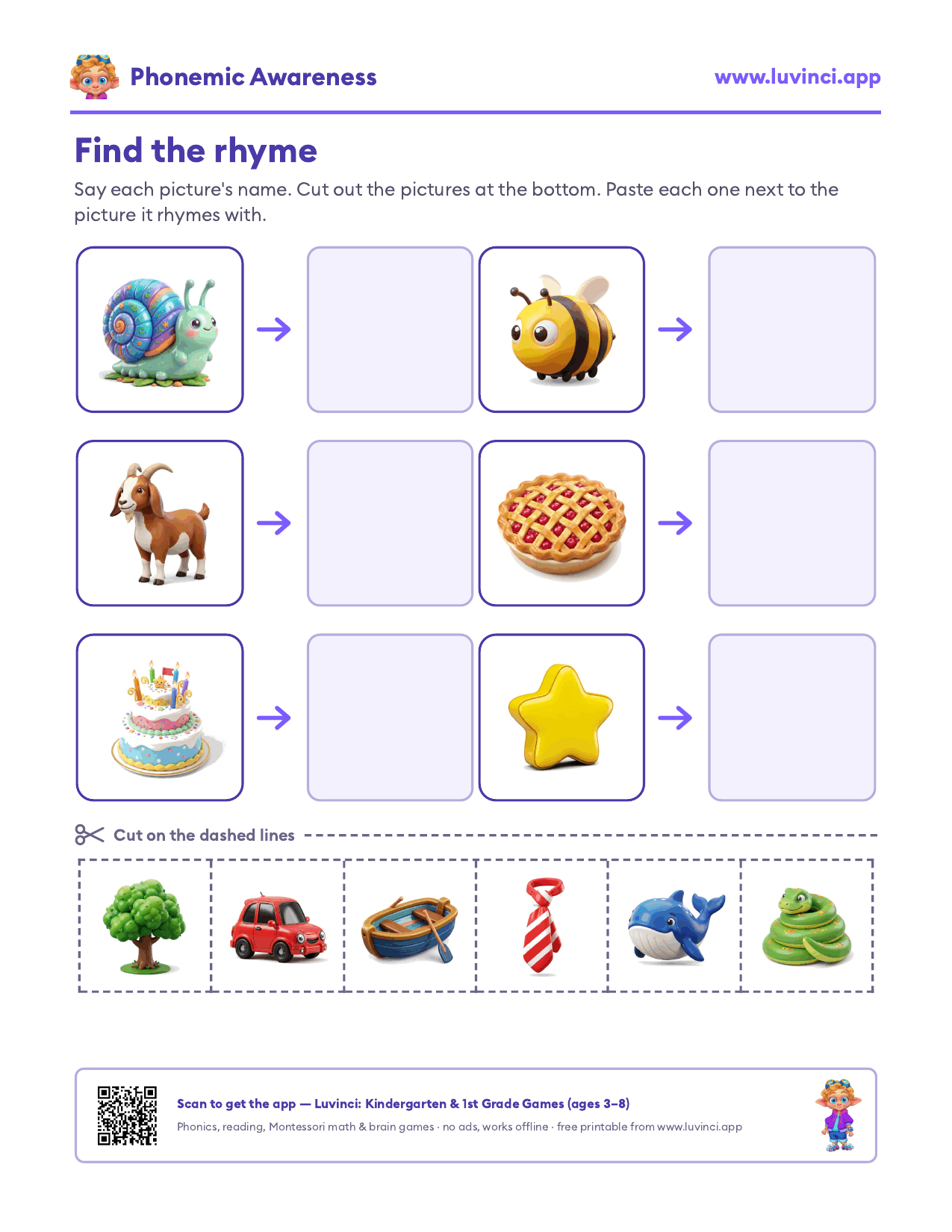
- Page 1: rhyme pairs. Cut and paste.
- Page 2: same first sound. Draw a line.
- Page 3: clap and color.
- Page 4: count the sounds. Cut and paste.
- Page 5: next step. Write the first letter.
- Page 6: the picture names and the answer key.
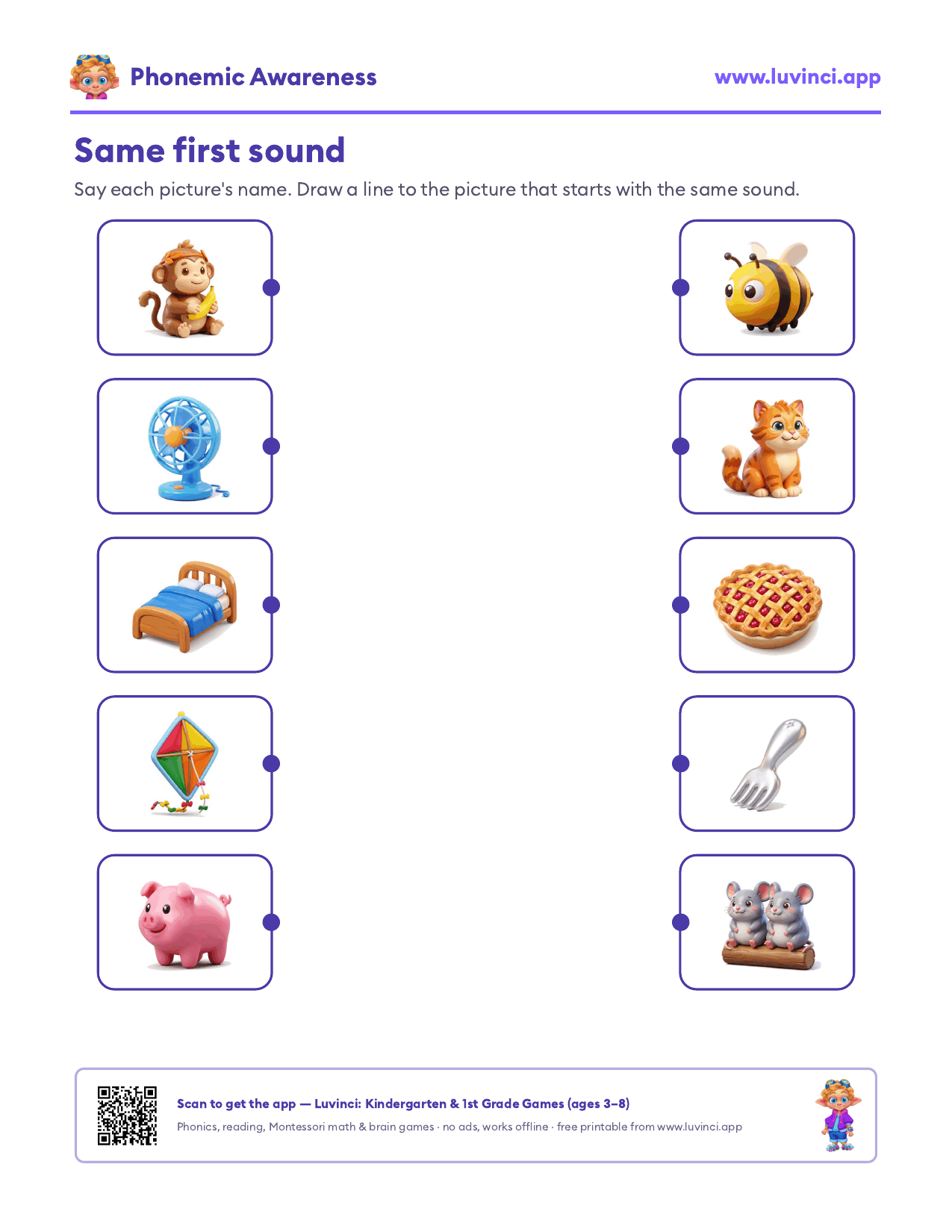
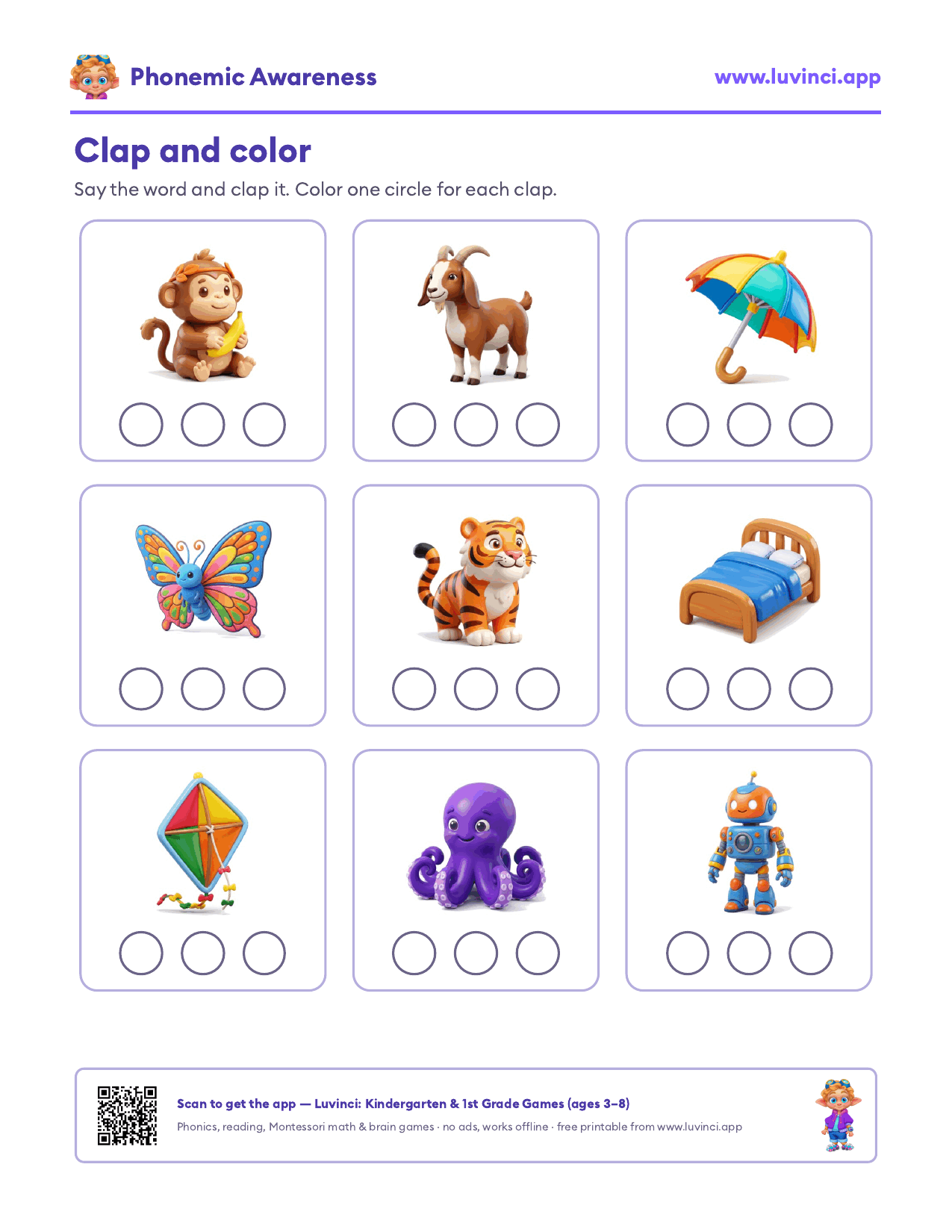
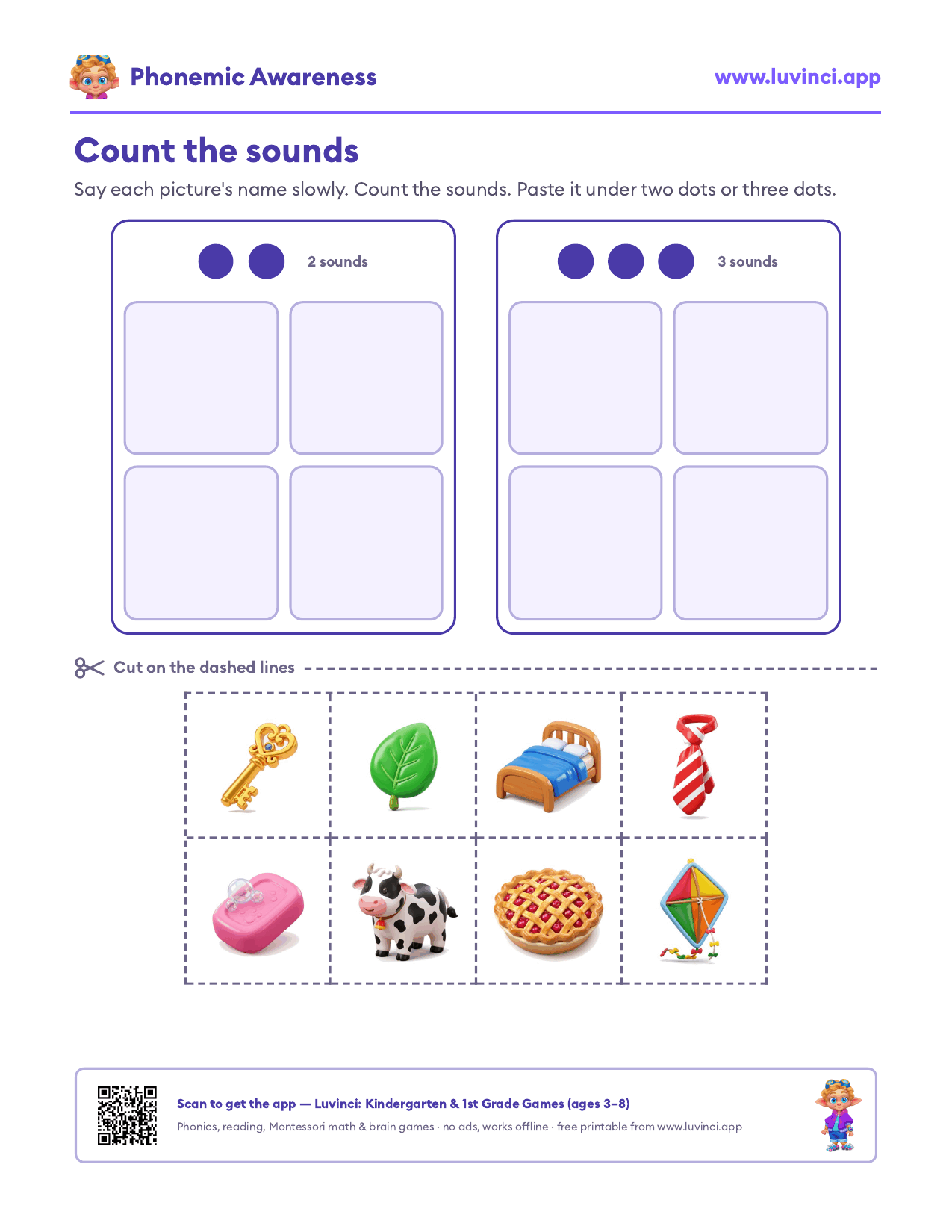
You’ll find every picture’s name on page 6, so you both say the same word.
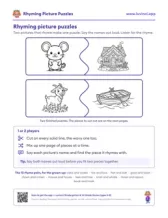
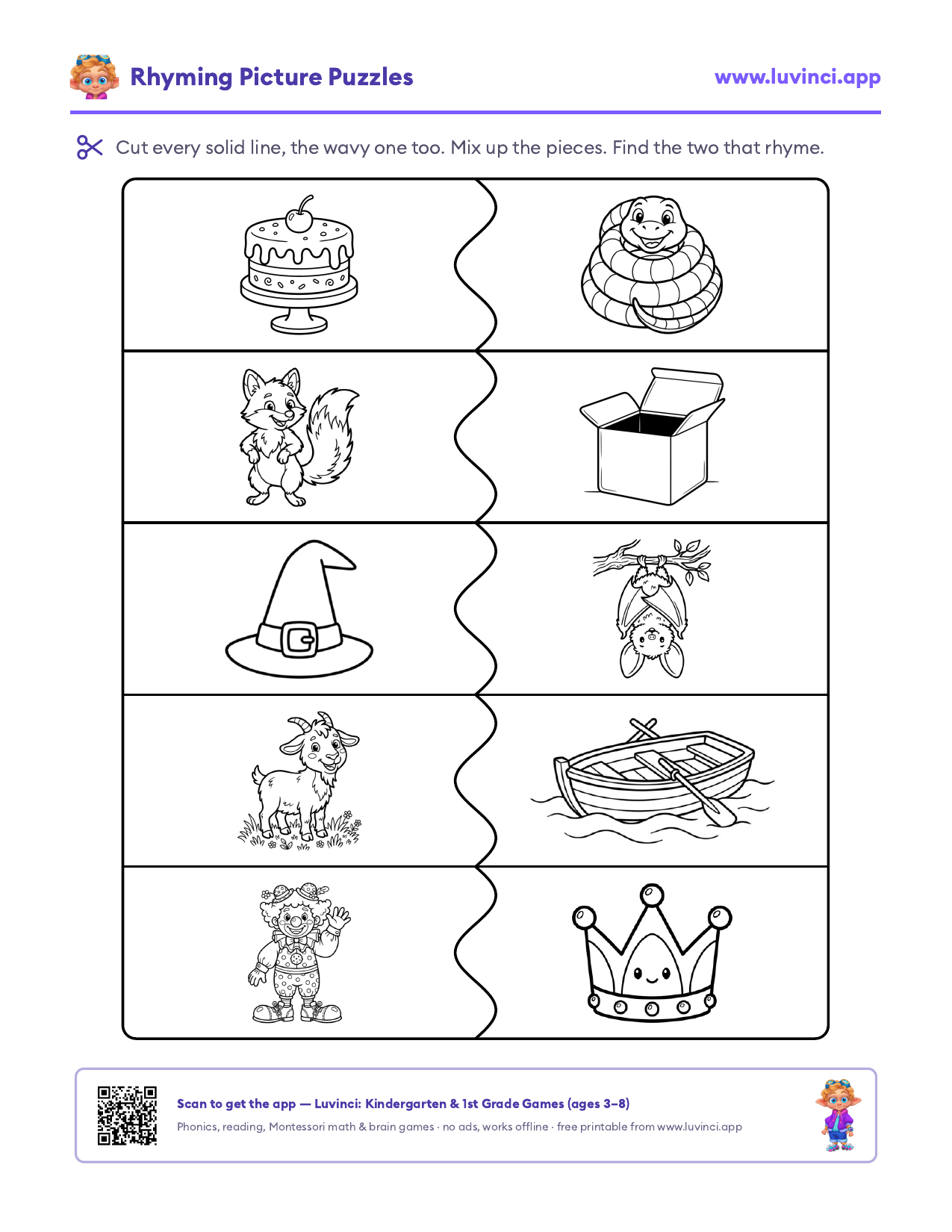
Our rhyming picture puzzles come as a separate free PDF. Two rhyming pictures fit together on each puzzle, like mouse and house.
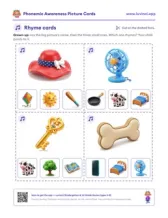
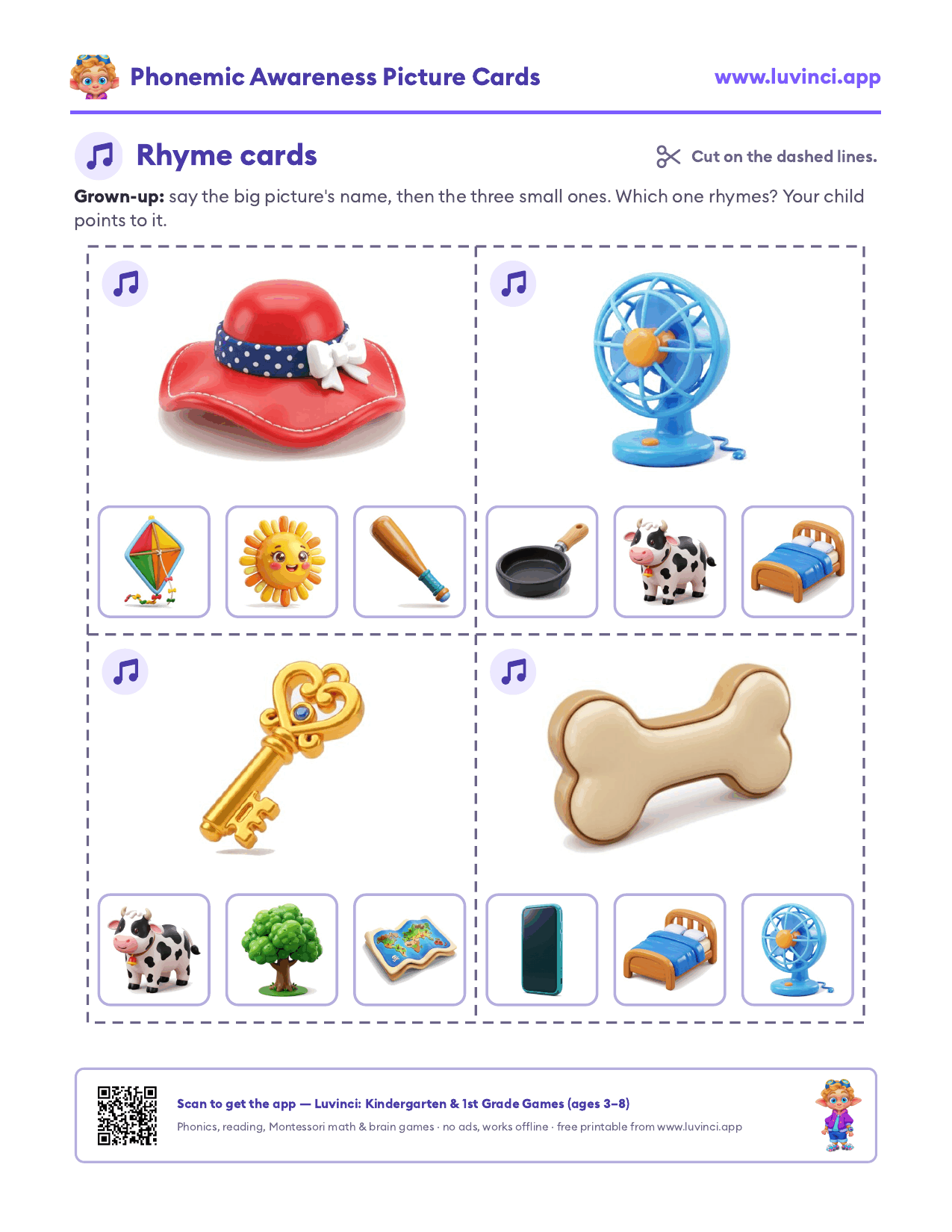
The phonemic awareness picture cards put one picture next to three choices. Your child points to the one that rhymes, starts the same, or has the same claps.
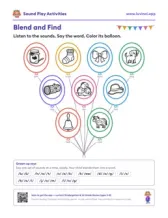
Our free sound play activities turn four of these games into picture pages. Your child blends sounds to find a balloon, pushes a coin into sound boxes, matches last sounds and changes the first sound to make a new word. The sounds you say are printed right on the pages.
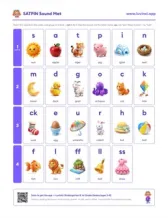
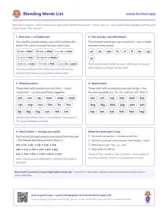
Once your child knows some letter sounds, our SATPIN sound mat and the Word Builder bring letters in.
Printing tips:
- A black and white print is fine.
- Print the puzzles and picture cards on cardstock. Laminate the picture cards if you can.
Phonemic awareness vs phonological awareness
Phonological awareness is the big umbrella. Under it, phonemic awareness is the smallest part.
| Term | What it means | Example |
|---|---|---|
| Phonological awareness (the umbrella) | Every sound part of spoken words. Syllables, rhymes, the first sound plus the rest, and single sounds. | Clap ba-na-na. Cat and hat rhyme. |
| Phonemic awareness (the smallest part) | Single sounds only, hearing them and changing them. | Sun has three sounds, /s/ /u/ /n/. |
| Phonics | Matching those sounds to letters. | The letter s says /s/. |
Rhyming and clapping are phonological awareness, and they are not phonemic awareness. Hearing the /s/ in sun is both, since phonemic awareness sits under the umbrella. You’ll see both names used for the same games.
Phonics is the next step, once letters join in. Our guide to phonics vs. phonemic awareness explains that difference.
Bigger parts usually come first. They overlap, so you can start first sounds before rhyming is finished.
English has about 44 sounds, depending on accent and how you count.
15 games, from warm-ups to phonemic awareness
Games 1 to 6 warm up with bigger parts of words. Games 7 to 15 are the phonemic awareness activities, with single sounds. Plan on about five minutes for each game. Say the sound, not the letter name. Say /mmm/, not “em”.
In this post, /a/ is the sound in apple, /e/ in bed, /i/ in pig, /o/ in hot and /u/ in up.
Warm-ups: syllables and rhymes
These games work on bigger parts of words. They’re phonological awareness, the warm-up before single sounds.
Rhyming words share the vowel and everything after it, like c-at and h-at. Cat and bit end the same but don’t rhyme.
- Clap the name. Syllables. Say, “Let’s clap your name. Ma-ya. Two claps! Now clap Grand-ma.” Start with family names, then clap cat, monkey, banana and butterfly.
- Chin drop. Syllables. “Put your hand under your chin. Say pizza. How many times did your chin drop?” Try pizza, tiger, robot, elephant and umbrella.
- Rhyme or not? Hear a rhyme. “Say ‘yes!’ if they rhyme. Cat, hat?” Pairs that rhyme are cat and hat, goat and boat, cake and snake, bee and tree, and star and car. Mix in some that don’t, like goat and fish.
- Odd one out. Hear a rhyme. “Cat, hat, sun. Which one doesn’t rhyme?” Then try goat, boat, fish and mouse, house, cup.
- Finish my rhyme. Make a rhyme. “I see a goat in a…” (boat). “A bee in a…” (tree). Try mouse and house, fox and box, cake and snake. Silly words that rhyme count too.
- Broken word. The first sound plus the rest. “Listen. /s/… un. What word is it?” (sun). Then try map, fish, cat, bed and pig.
First, last and middle sounds
This is where your child listens for one sound. The first sound is the easiest to hear.
- I spy a sound. The first sound. “I spy something that starts with /mmm/.” Try /m/ for moon, map, mouse and milk. Try /s/ for sun, sock and soap, and /f/ for fish and fan.
- Same sound detective. Match first sounds. “Bus, bed, boat. What sound is the same at the start?” (/b/). Then try cat, cup, kite and sun, sock, soap.
- Last sound jump. The last sound. “Cat. What sound is at the end?” Your child says /t/ and jumps. Try hat, pot, map, cup, bus, duck and sock.
- Middle sound stretch. The middle sound, for late kindergarten and 1st grade. “Mop. Say it slowly. /mmm/ /o/ /p/. What’s the middle sound?” It’s /o/, as in hot. Try cat, map, bed, net, pig, fish, sun and bus.
Put sounds together, then pull them apart
These two matter most for reading and spelling.
- Secret word. Put sounds together. “I’m thinking of a secret word. /b/ /e/ /d/. What is it?” Start with two sounds, like key, pie and tie. Then moon, leaf and soap. Then bed, pig and cat. There’s more in our oral blending guide.
- Tap and count. Pull sounds apart. “Sun. Tap a finger for each sound. /s/ /u/ /n/. How many? Three.” Try map, cat, pig, bed and mop. Then try duck, fish, sheep and shoe, which have fewer sounds than letters. You can also draw three boxes and push a coin into one box for each sound.
Change a sound
These games are the hardest. Most kids reach them late in kindergarten or in 1st grade.
- Add a sound. Add a first sound. “Say ice. Now put /m/ at the front.” (mice). Then make rice and dice. Turn eat into meat and seat, at into cat, and top into stop.
- Take a sound away. Start with a word part. “Say cupcake. Now say it without cup.” Try snowman and popcorn too. Then take away one sound. “Say meat. Now say it without /m/.” (eat). Try mice to ice, boat to oat, and gate to eight.
- Silly swap. Swap a sound. “Say cat. Change /k/ to /h/.” (hat). “Now change it to /b/.” (bat). Try sun, fun, bun and run, then pig, wig, big and dig. In 1st grade, swap the middle sound. Hat, hot, hut, hit.
How to play phonemic awareness games at home
Short games played often beat a long session you rarely do.
- Pick one or two skills at a time, like rhymes or first sounds, and stay there for a week or two. A few minutes most days is plenty.
- Keep short sounds short. Say /b/, not “buh”.
- Stretch the sounds you can stretch. Say /mmm/, /sss/ and /fff/.
- If a game is hard, go back one step. These are games, not tests.
- Accept your child’s accent. In some places pin and pen sound the same.
- Truck and tree can sound like they start with /ch/ to a child. Accept it, or skip those words.
- Count sounds, not letters. Fish has three sounds and four letters.
Games 3 to 8 work in the car. Games 5 and 13 to 15 work well in the bath.
Which games for which age?
Treat these as rough school timelines, not as deadlines.
- Pre-K: clapping syllables, hearing and starting to make rhymes, and the first sound in a word (games 1 to 5, 7 and 8).
- Kindergarten: making rhymes, first, last and middle sounds, starting to put sounds together and pull them apart in short words, and adding or swapping a first sound (games 5 to 13 and 15).
- 1st grade: every sound in longer words like frog and stop, taking a sound away, and swapping the middle sound (games 10 to 15).
Start by ear. Once your child knows some letter sounds, let letters join in. Build cat with letter tiles, then swap the c for an h. Our order to teach letter sounds is the next step.
Every child moves at their own pace. If you feel worried, talk to your child’s teacher.
For where this fits in the whole path, see how kids learn to read.
FAQ
What are the 7 essential phonemic awareness skills?
There’s no official list everyone uses. Lists of 7 or 8 count the same skills in different ways. They include hearing the first sound, matching sounds, putting sounds together, pulling them apart, and adding, taking away or swapping a sound. Many lists add rhyming. For reading, putting sounds together and pulling them apart matter most.
Can you give me an example of how to segment words?
Say map. Tap a finger for each sound, /m/ /a/ /p/. That’s three sounds. Segmenting means pulling a word apart into its sounds.
What is phonemic awareness in kindergarten?
In kindergarten, phonemic awareness means hearing the single sounds in short spoken words. Rhymes and syllables are the warm-up. By the end of the year, most schools hope a child can name the first, middle and last sound in a word like cat. Many kindergartens also start putting three sounds together into a word, and swapping the first sound to make a new word.
What is the easiest phonemic awareness task?
Hearing the first sound in a word, like the /mmm/ in moon. Sounds you can stretch, like /m/, /s/ and /f/, are the easiest to hear.
What is the hardest phonemic awareness skill?
Taking away or swapping a sound inside a word. Saying stop without the /t/ gives sop. That’s usually a 1st grade skill or later.
Do you teach phonological awareness or phonemic awareness first?
Bigger parts usually come first, like syllables and rhymes. Single sounds come next. They overlap. You can play first-sound games while your child is still learning to rhyme.
What is an example of a phonemic awareness activity?
Ask, “What’s the first sound in sun?” Your child says /s/. No letters needed.
The takeaways
- Phonemic awareness is hearing the single sounds in spoken words. No letters needed.
- Rhymes and syllables are the warm-up. They’re phonological awareness.
- Putting sounds together and pulling them apart matter most.
- Stay on one or two skills at a time, a few minutes most days, by ear.
- Print the free phonemic awareness worksheets, with picture pages and an answer key.
In our reading games, every letter is sounded out when your child taps it, and the read-aloud stories are written in rhyme. The games on this page are screen-free, so you can play them anywhere.
Sources
- National Reading Panel (2000). Teaching Children to Read, Reports of the Subgroups, Chapter 2, Part 1, Phonemic Awareness Instruction.
- Reading Universe. Phonological Awareness and Phonemic Awareness, the skill explainers for rhyming, onset-rime, phoneme identification, segmentation and blending and manipulation, and the Phonological Awareness Continuum.
- Florida Center for Reading Research. Kindergarten and First Grade Student Center Activities, Phonological Awareness.
- Common Core State Standards. Reading: Foundational Skills, Kindergarten and Grade 1.
- Wikipedia. Phonemic awareness and Phonological awareness.
- Carnegie Mellon University. The CMU Pronouncing Dictionary (word checks).